


A trombone with valves?
In a recent episode of our fun new series, Just In Case (in which Winston-Salem Symphony musicians show us what’s inside their mysterious cases), WSS principal trombonist Brian French displayed the things he carries in his case for rehearsals and concerts. Then he showed how he could remove his valve if he needed to.
Wait, trombones have valves?
Despite popular imagery, trombones have employed valves since the mid-1800s.
The trombone is a brass instrument that works by vibrating (“buzzing”) one’s lips into a cup-shaped mouthpiece and changing notes in one (or both) of two ways: vibrating faster (higher notes) or slower (lower notes), and moving a telescoping slide inward (higher notes, generally speaking) or outward (lower notes, generally speaking). The instrument has been around since the mid-1400s and for hundreds of years the slide gave the trombone an advantage over other brass instruments like the trumpet and horn. Those instruments, with a fixed size, could only play one set of lip-vibrated notes. The trombone, which could change its size, offered more sets of notes.
Valves for brass instruments were invented in the mid-1800s, and trumpets and horns (and the newly invented tuba) could enjoy a similar, greater selection of notes. But trombones weren’t to be left out of this new invention.
The standard (“straight”) tenor trombone, bent into its shape, is about 9 feet of brass tubing from mouthpiece to bell, and is in the key of B-flat. The 19th-century German instrument maker Christian Sattler found that he could add an extra 3 feet of tubing, with a thumb valve to access that tubing, and make the instrument sound lower, in F. He called this the “tenor-bass trombone,” and it is the instrument now used most commonly in bands and orchestras around the world. It allows for lower notes that are impossible on a straight trombone, as well as allowing for simpler slide maneuvers for the player.
PS: yes, there is a trombone with three valves like a trumpet! In fact, this instrument was popular in German and Austrian orchestras in the mid 19th century, and is likely what would have been played on the premieres of works like Brahms’ 2nd Symphony and Dvořák’s 8th Symphony. While they are no longer used in modern symphony orchestras or bands, they are still popular for jazz and are common in Eastern Europe.
Hear the noble sounds of the trombone in these concerts this season.
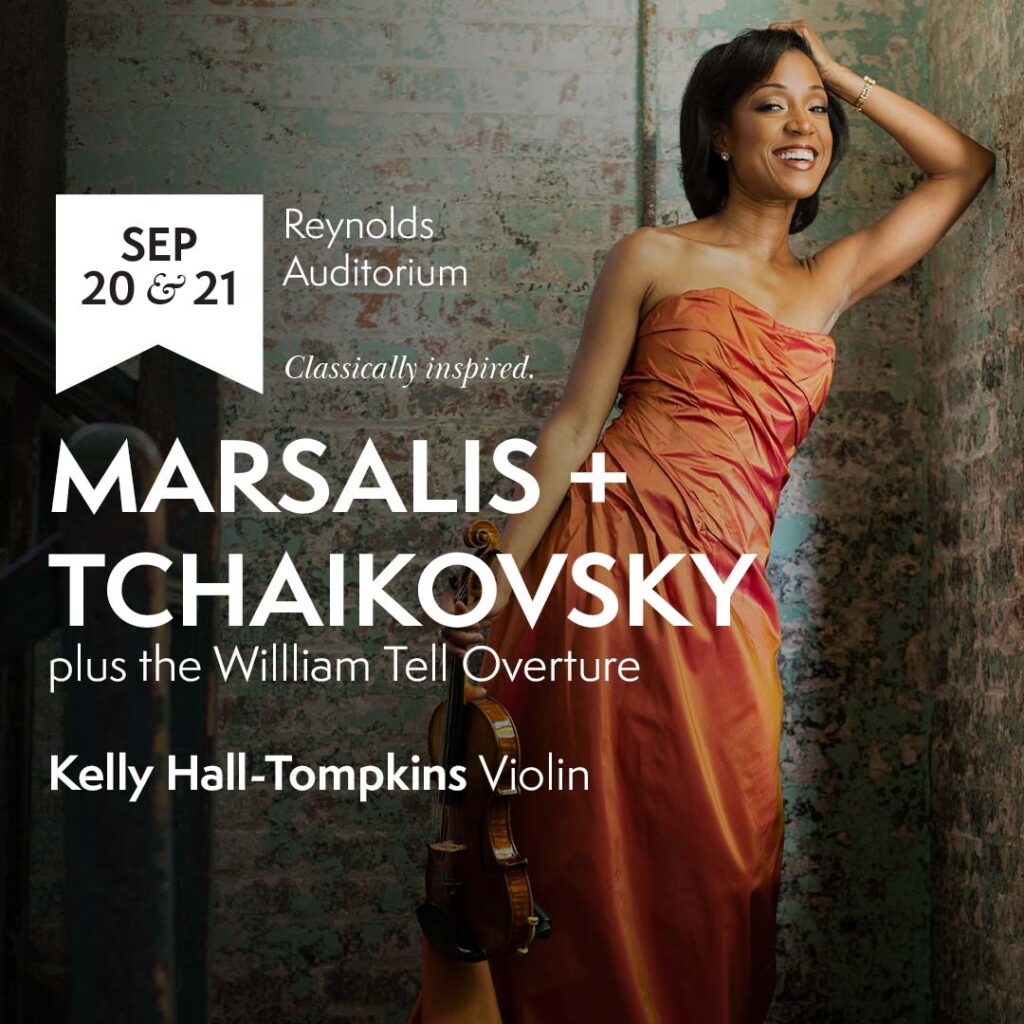
The trombone section gets a workout in the “storm scene” of Rossini’s William Tell Overture. Lots of great trombone sounds in Tchaikovsky’s Symphony No. 5, also.
Marsalis + Tchaikovsky
plus the William Tell Overture
Sep 20 & 21
Reynolds Auditorium
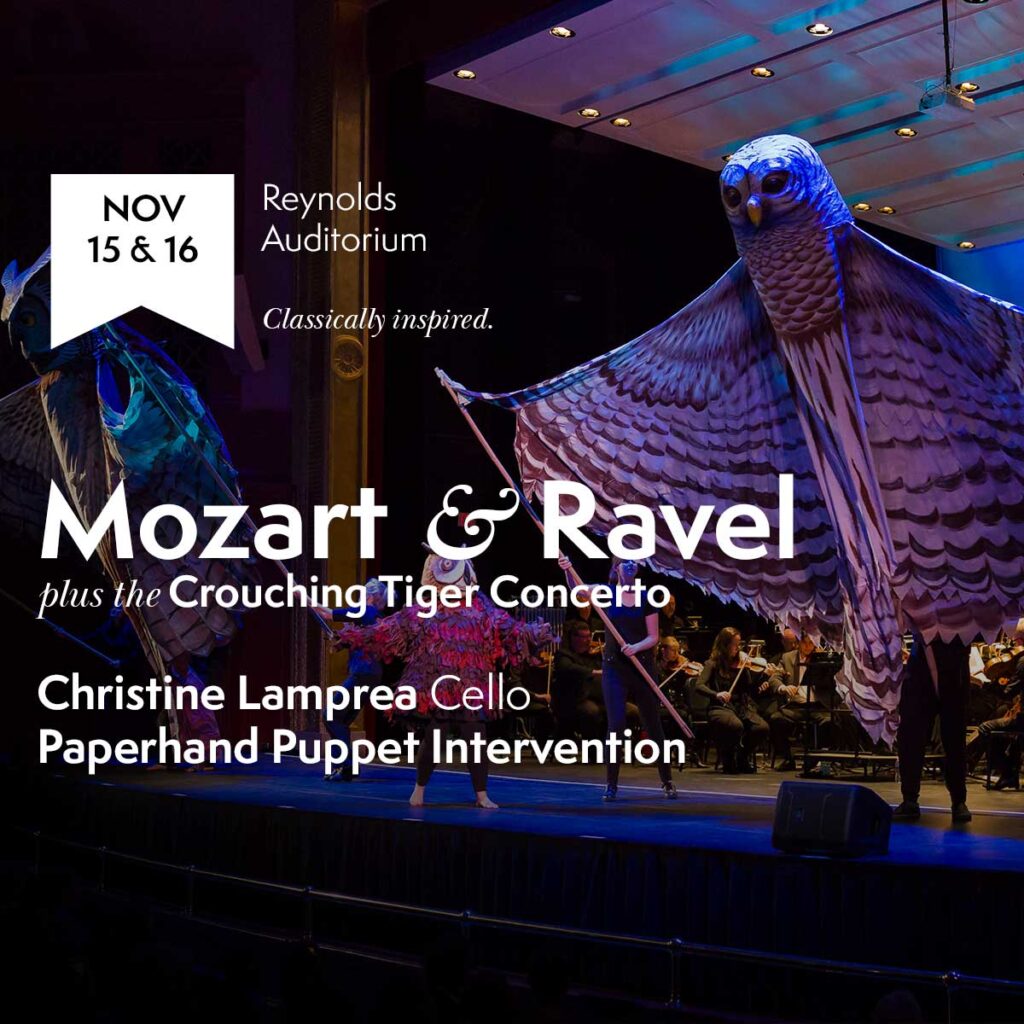
Hear the classical “voicing” of the section—alto, tenor, and bass trombones—in Mozart’s sunny overture to The Magic Flute on a concert that features the brilliance of cellist Christine Lamprea and the enormous creativity of Paperhand Puppet Project.
Mozart & Ravel
plus the Crouching Tiger Concerto
Nov 15 & 16
Reynolds Auditorium
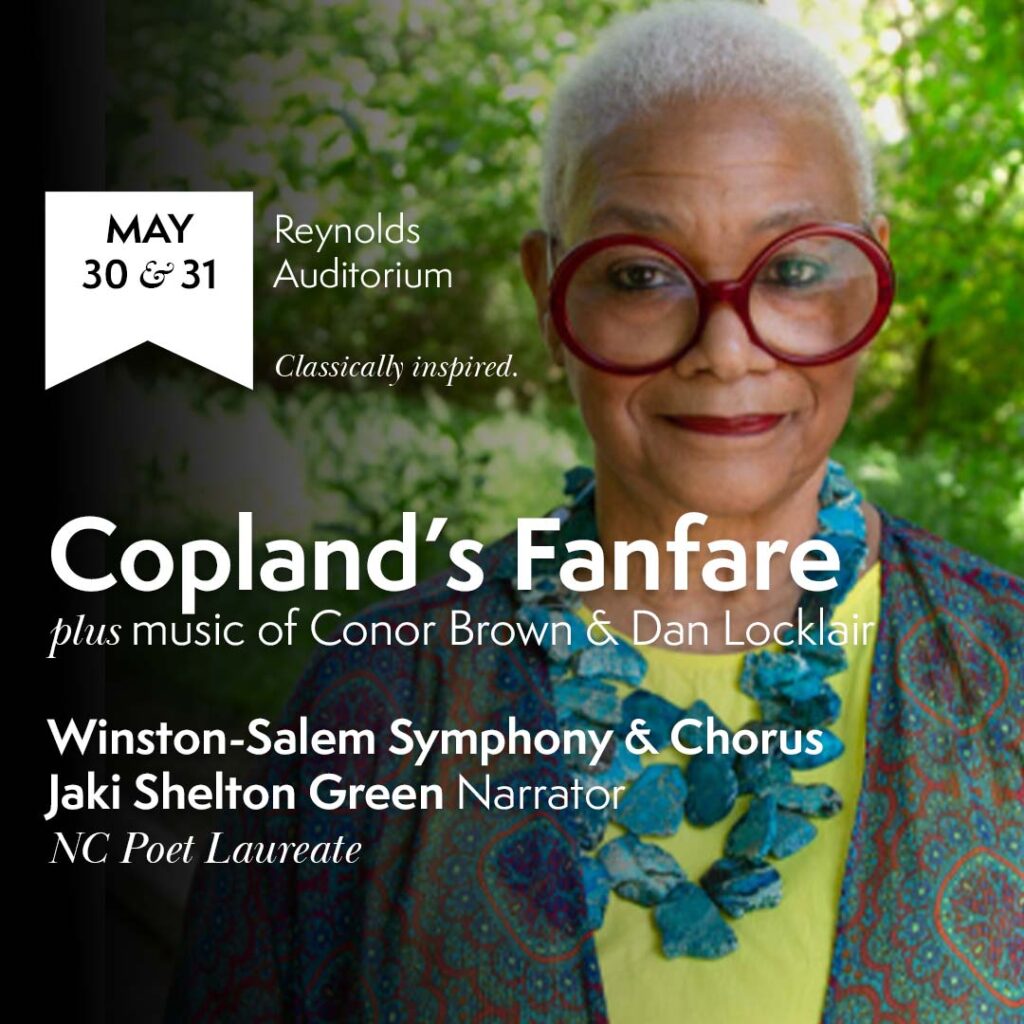
Copland’s towering Symphony No. 3, which contains the familiar brass choir of the “Fanfare for the Common Man,” also features a beautiful trombone solo. The work is paired with Conor Brown’s quirky How to Relax with Origami and Winston-Salem composer Dan Locklair’s poignant SINCE DAWN.
Copland’s Fanfare
plus music of Conor Brown and Dan Locklair
May 30 & 31
Reynolds Auditorium