


Copland’s Third Symphony: The Sound of an American Moment
If one piece captures the spirit of American classical music in the mid-20th century, it might just be Aaron Copland’s Symphony No. 3.
Premiered in 1946, just after the end of World War II, the symphony feels both reflective and expansive—looking back at a turbulent time while also imagining what comes next. It’s often considered Copland’s greatest orchestral work, and it’s easy to hear why: this is music that is bold, spacious, and unmistakably American in sound.
A Composer Finding His Voice (Again)
By the time Copland began writing his Third Symphony, he was already well-known for music that drew on jazz, folk tunes, and distinctly American themes. But with this piece, he set out to do something different.
He wanted to write a full-scale symphony in the grand tradition—something that could stand alongside the great symphonies of composers he admired, like Mahler and Shostakovich.
The result is a four-movement work that blends that larger symphonic structure with the open, accessible style that made Copland famous.
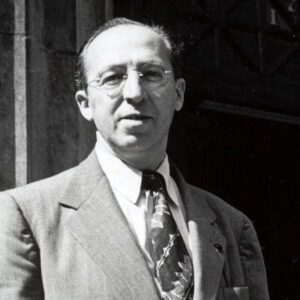
Copland’s Third Symphony
Appears on season-ending concerts with music by Conor Brown and Dan Locklair
May 30 & 31
What You’ll Hear
Even without a musical background, you can follow the symphony’s journey by listening for shifts in mood and character across its four movements:
- The first movement opens quietly but confidently, with broad, spacious music that unfolds gradually. It has a sense of scale—like a wide landscape coming into view.
- The second movement is livelier and more rhythmic, built like a traditional scherzo (a playful, fast movement). You’ll hear energetic exchanges between sections of the orchestra, along with a contrasting, more lyrical middle section.
- The third movement offers a change in atmosphere. It’s more reflective and fluid, moving seamlessly from one idea to another. At times it feels almost nostalgic, with solo instruments stepping forward in more intimate moments.
- The final movement is where everything comes together—and where many listeners have a moment of recognition.
The Fanfare You Know
The finale incorporates Copland’s famous “Fanfare for the Common Man,” originally written in 1942 during World War II.
You may recognize its bold, brass-driven sound: simple, powerful, and deeply direct. In the symphony, Copland weaves that fanfare into a much larger musical story—transforming it, developing it, and ultimately building the entire final movement around its spirit.
When it returns in full force near the end, it feels less like a quotation and more like a culmination.
Curious to learn even more?
Read David Levy’s program notes for this concert.
A Symphony About Scale—and Possibility
One of the most striking things about Symphony No. 3 is its sense of space. Copland uses the orchestra to create music that feels wide open and expansive, often associated with the American landscape.
But beyond that, the piece carries a larger emotional weight. Written at the end of a global conflict, it balances strength and optimism, offering a kind of musical “next step” forward.
Listening Today
Nearly 80 years after its premiere, Copland’s Third Symphony still speaks clearly. Its mix of grandeur and accessibility makes it a powerful introduction to symphonic music—and a deeply rewarding listen for those who already love it.
On this program, alongside Dan Locklair’s Since Dawn and Conor Brown’s How to Relax with Origami, it becomes part of a broader story: music that reflects where we’ve been, who we are, and where we might be headed next.
On Audio: Copland’s Third Symphony
Copland Symphony No. 3
Winston-Salem Symphony
Robert Moody Conductor
September 2012