


The Physics of Fortissimo
Did you know that sound waves have a physical “speed limit” on Earth?
In our atmosphere, a normal sound wave physically maxes out at 194 decibels. At that exact point, the sound wave creates a total vacuum in its troughs. Anything louder stops being an acoustic sound and becomes a physical kinetic shockwave.
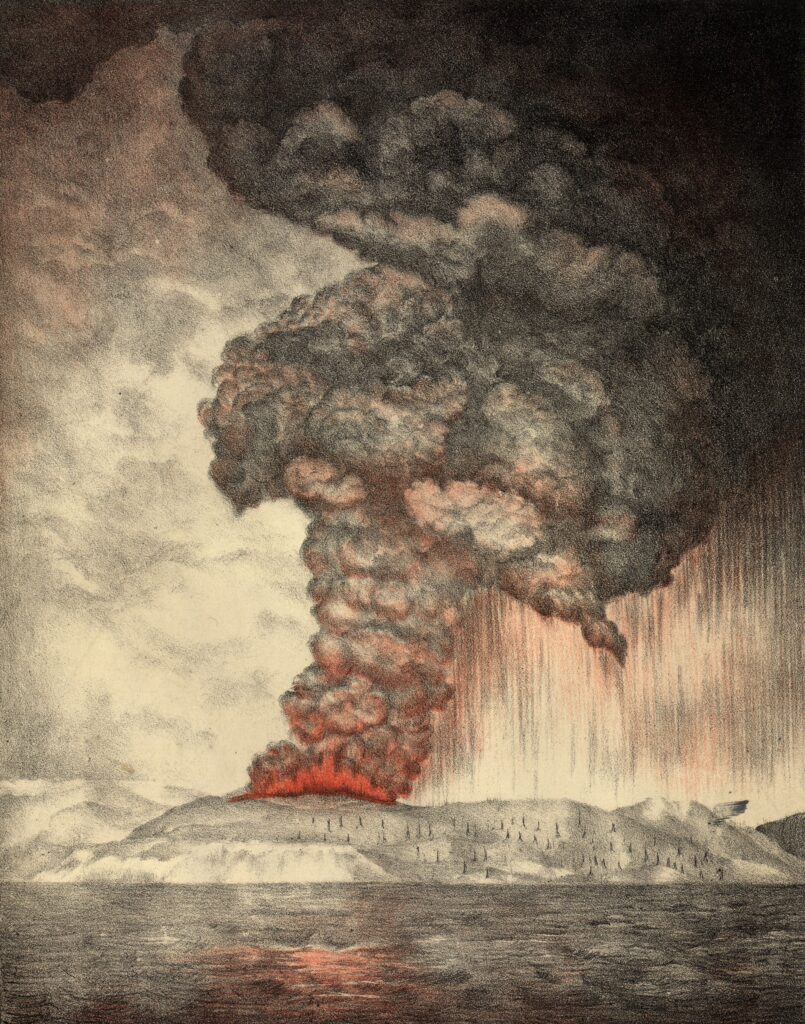
Historically, the only events to truly shatter this boundary are massive volcanic eruptions, like the famous August 27, 1883 Krakatoa event, which scientists estimate reached an off-the-charts 310 dB at its source—acting as a planetary pressure wave rather than a standard noise. The sound was heard 3,000 miles away and it burst the eardrums of sailors 40 miles away.
So, how close can a live symphony orchestra get to the absolute limit of acoustic power?
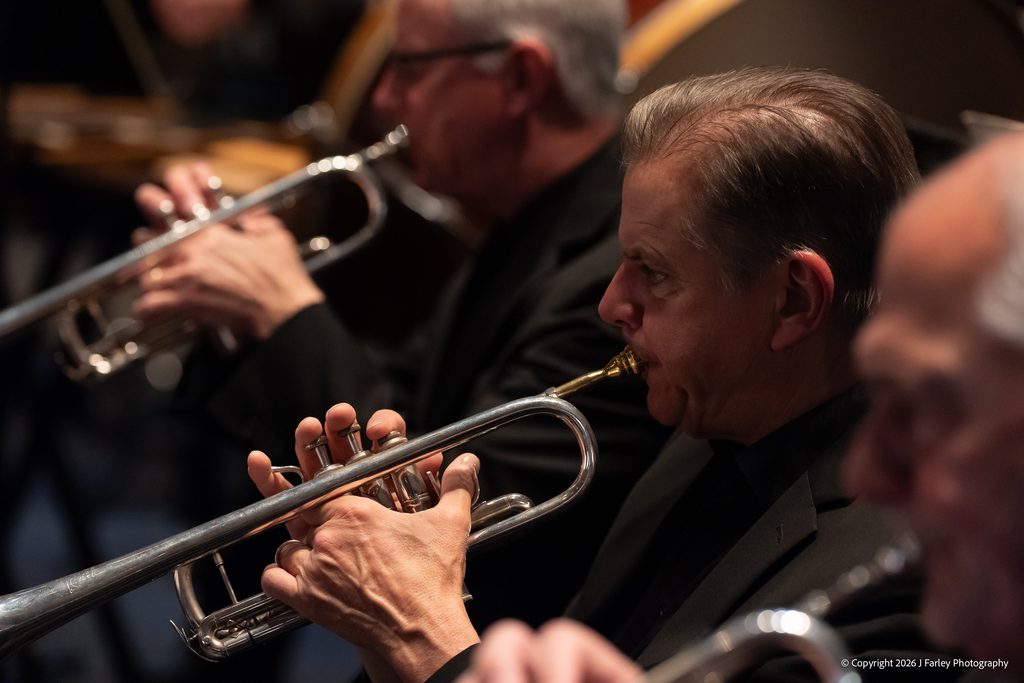


© J Farley Photography
In orchestral music, very loud passages are marked using the Italian terms “fortissimo” or “fortississimo” (written below the music with the symbols ff or fff ). During our season opener, our brass and percussion sections will regularly push past 105 dB—matching the volume of a live rock concert. And at the absolute climax of Sergei Rachmaninoff’s Symphonic Dances, a cataclysmic, full-force tam-tam strike will push the hall past 125+ dB. Rachmaninoff explicitly wrote in the score to let that final note ring out completely, leaving a literal wall of acoustic energy echoing through the hall. Musicians onstage nearest the tam-tam will be wearing special earplugs, and some may even have a clear plastic shield behind their heads.
Digital recordings compress these extreme dynamics. To truly feel the physical power of 120+ decibels of acoustic music, you have to be in the room.
Join us for the explosive start to our new season!
Gershwin, Rachmaninoff, & Trane
Saturday
Sep 26
7:30pm
Sunday
Sep 27
3:00pm